Overview
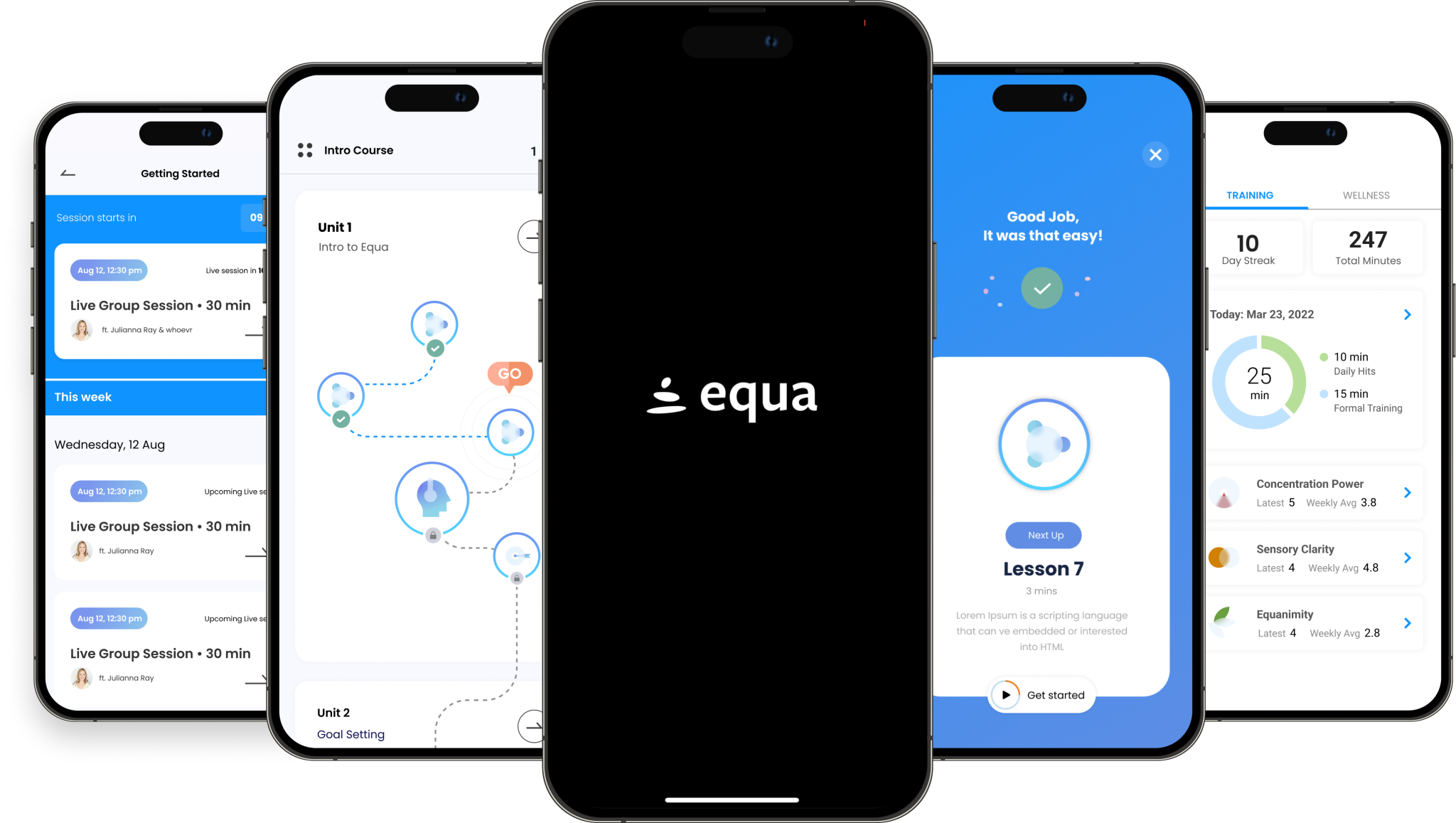
Equa is a mindfulness app for iOS and Android that offers personalized meditation training and coaching. I was brought in to build meaningful gamification from scratch, with the goal of sustaining user engagement from first encounter to the 14 day mark.
Role: Game Designer, Product Designer, Researcher
Duration: Jan 2023 - April 2023 (4 months)
Tools: Figma
Team: Morgan C. Evans, Yang Bai
Client: Equa Health
My Role
I was brought in with three design tasks: restructure the home and explore page to show the user training journey, design a reward system to sustain engagement, and improve the onboarding experience. Before designing anything, I spent the first weeks immersing myself in the mindfulness curriculum to understand where Equa was going and what the design needed to support.
The Design Challenge
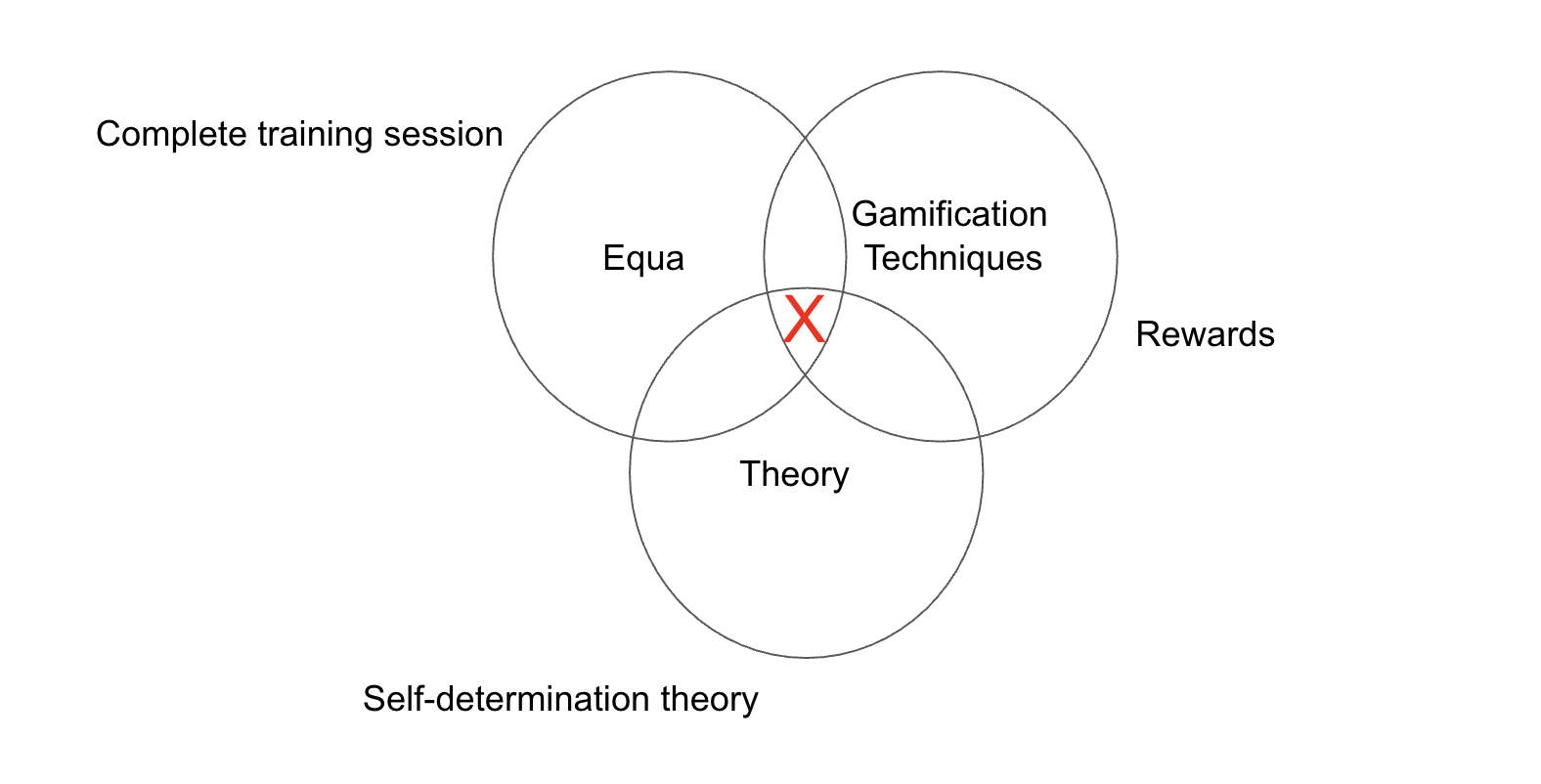
Equa had a mindfulness curriculum but no meaningful gamification connecting users to their learning journey. I identified the core problem: user metrics were not connected to learning skills. The goal was to build a gamification system that closed that gap while respecting the nature of mindfulness practice.
The Design Challenge
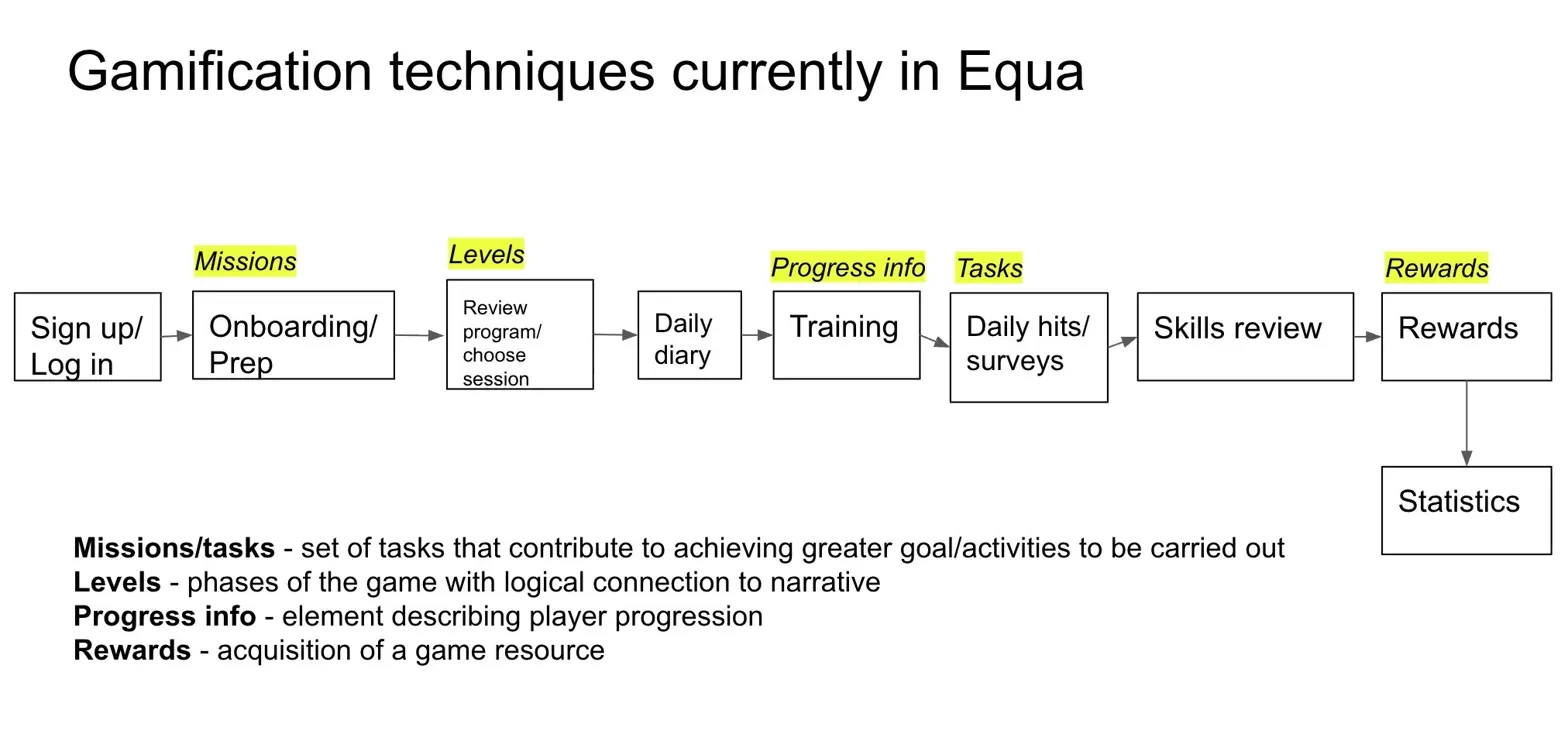
Before designing anything I mapped the existing user journey to understand where gamification could live, from onboarding through training, daily hits, skills review, and rewards. This gave me a framework for where to intervene.
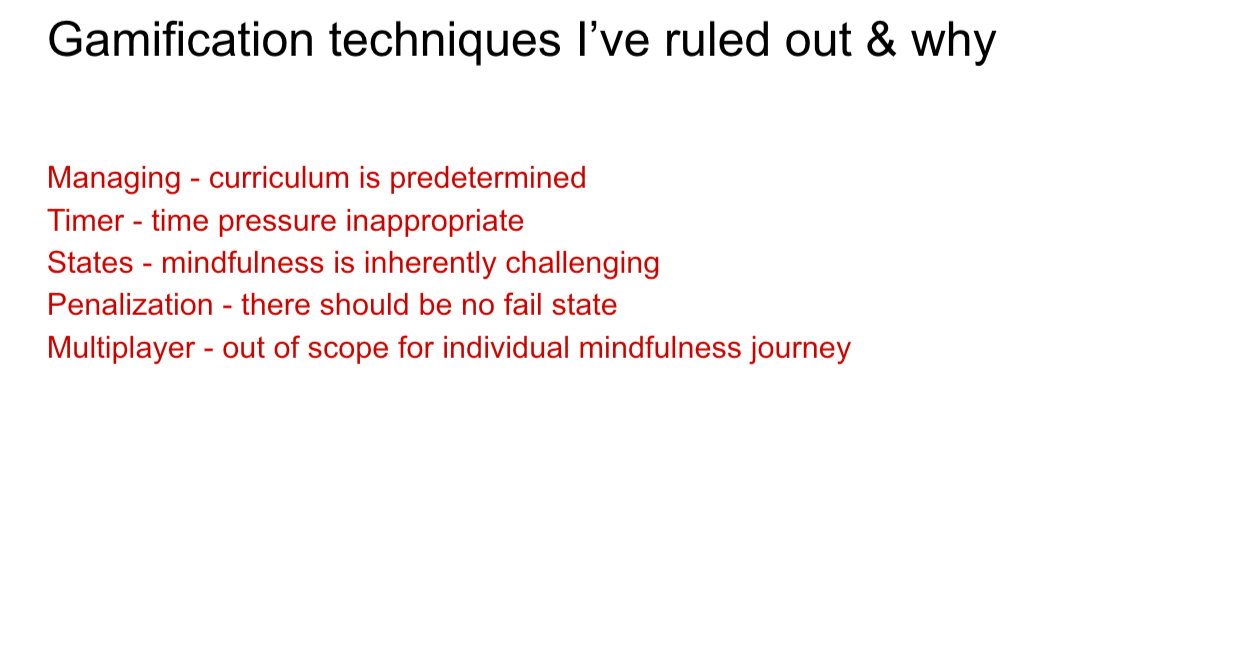
I then identified which techniques were a good fit for a mindfulness context and which to rule out entirely.
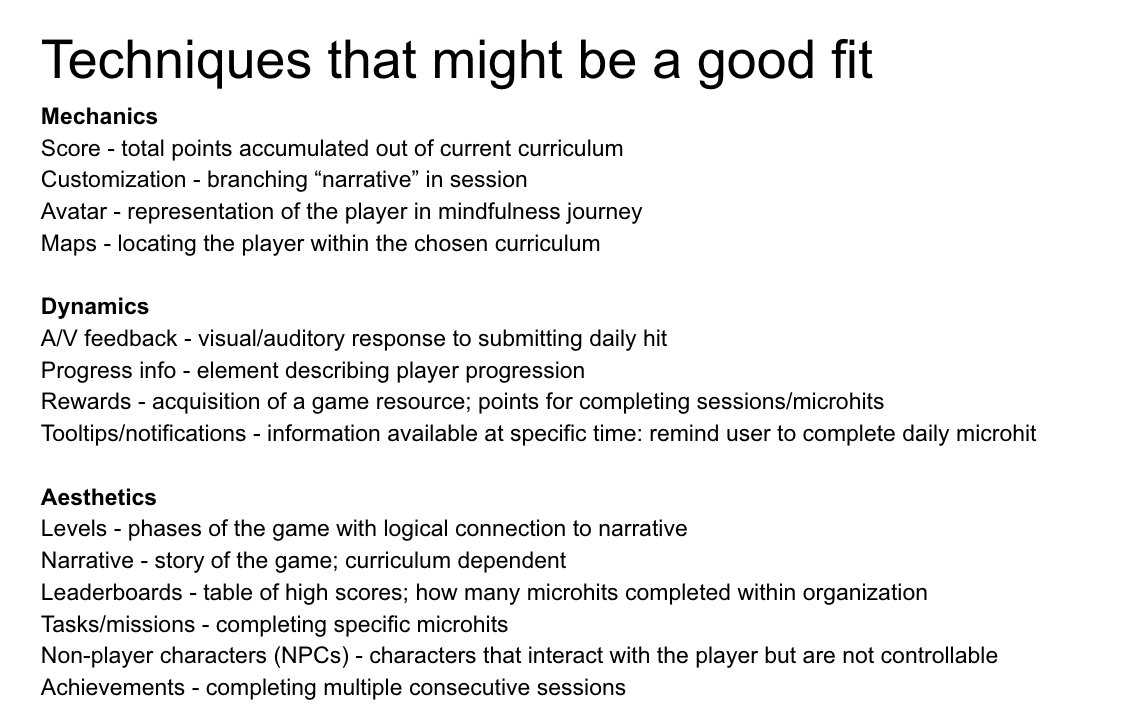
Ruling out techniques was just as important as identifying new ones. For a mindfulness app, time pressure is inappropriate, there should be no fail state, and the journey is inherently individual. These constraints shaped every design decision that followed.
Challenge Design
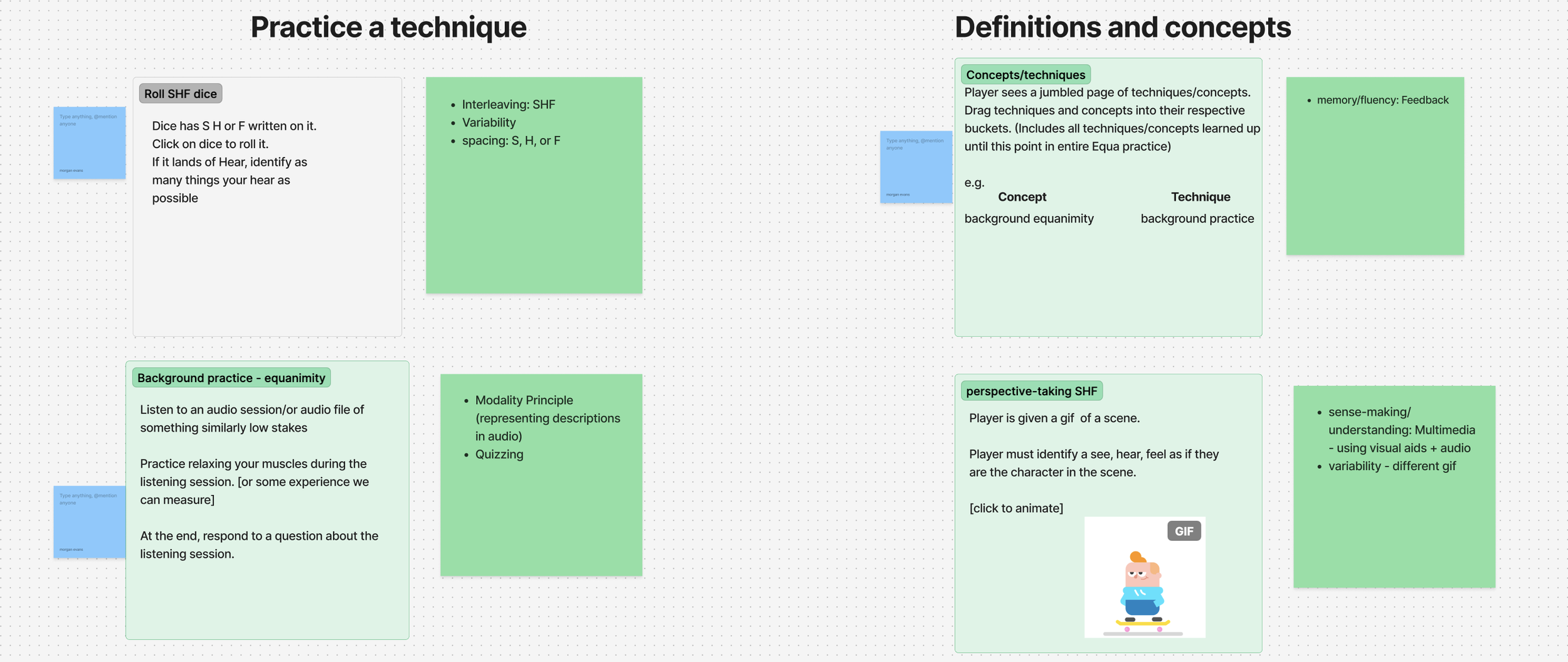
I met with the curriculum team across multiple hour-long sessions to understand the scope for challenges, then ideated 10+ minigame concepts and pitched them in a full team meeting. I built wireframes for two types of challenges grounded in learning theory, including interleaving, variability, the modality principle, and memory/fluency feedback.
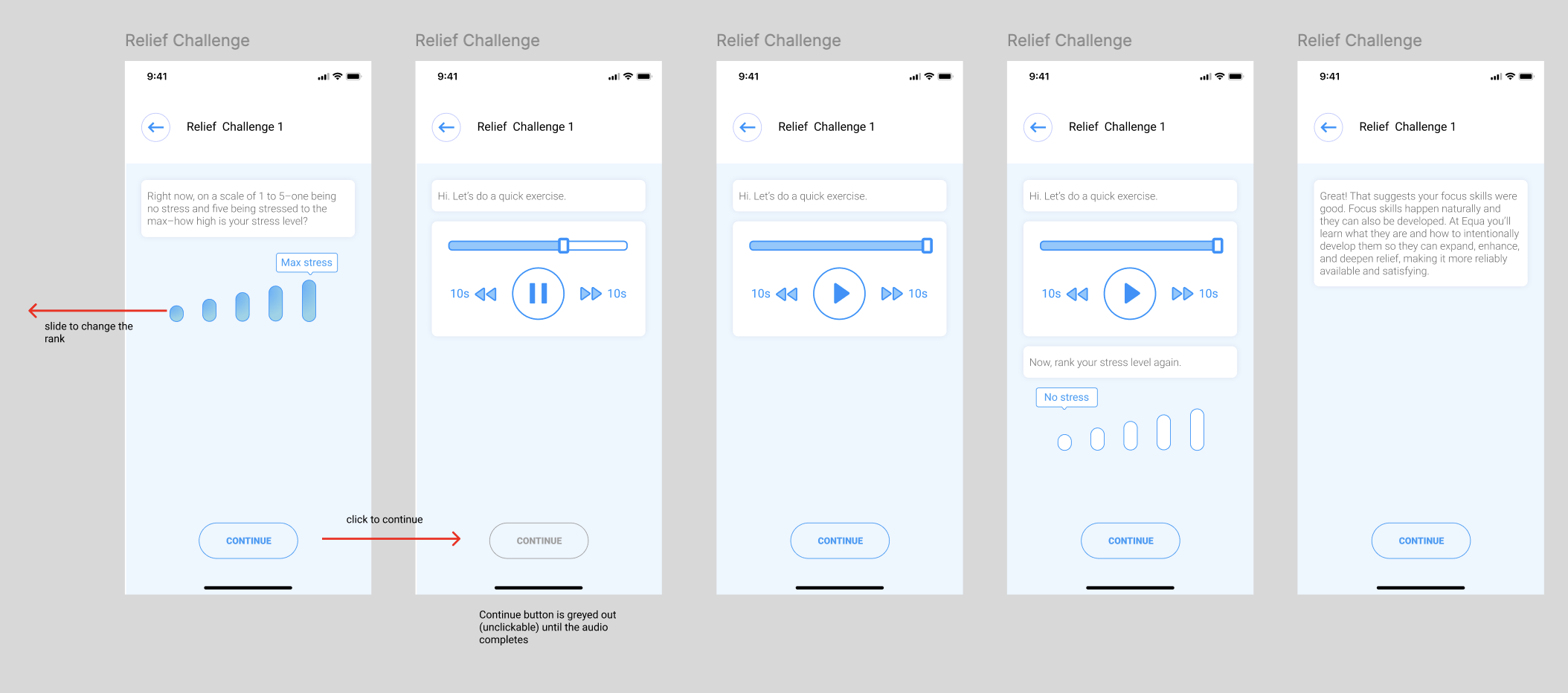
The team ultimately selected the quizzing technique, which became challenges like the relief challenge.
Home Screen Redesign
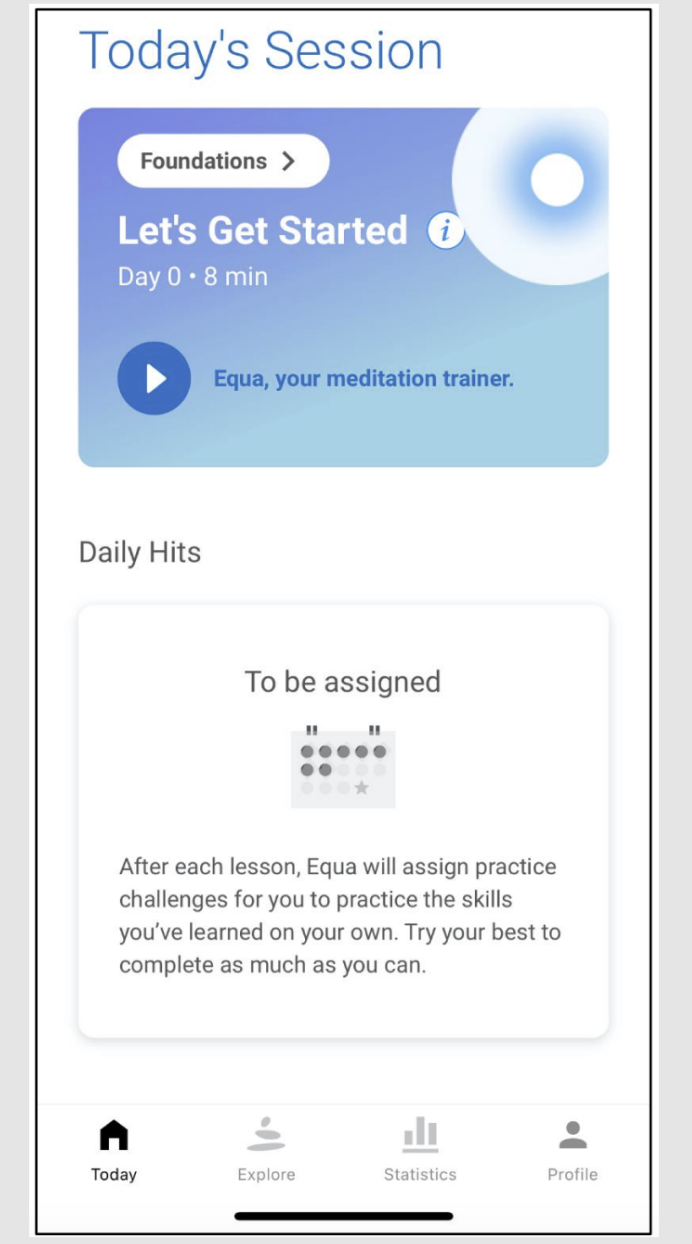
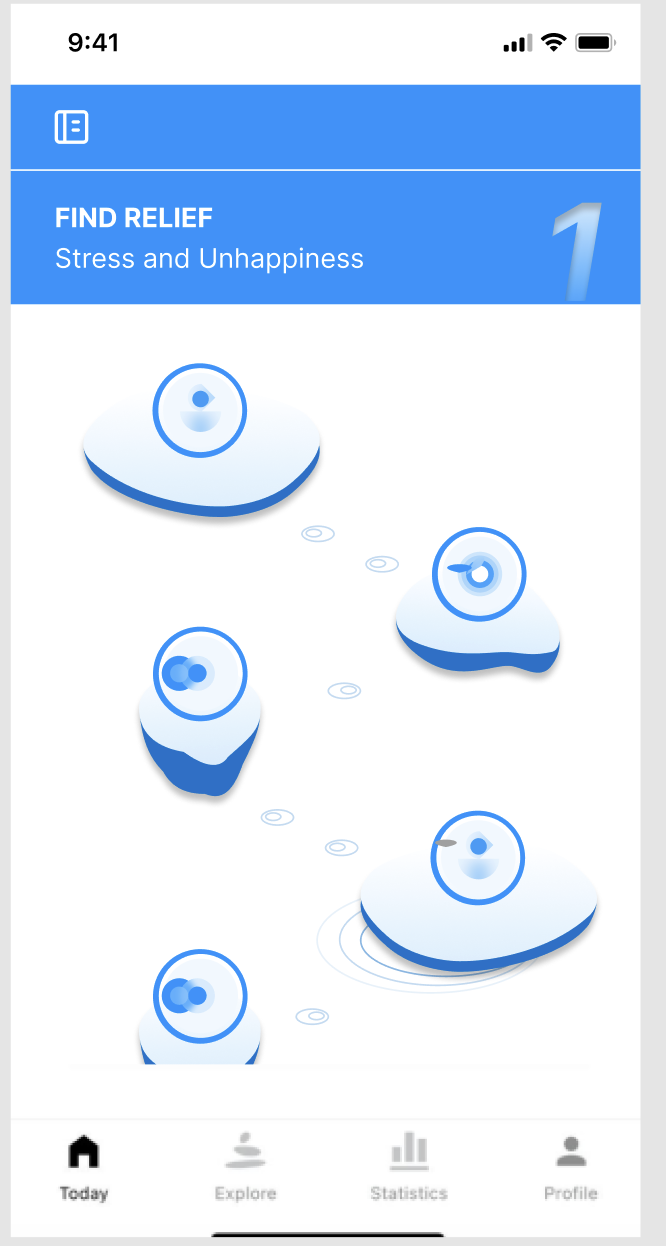
I collaborated with another designer to concept and wireframe a redesigned home screen, refining through rapid iterative prototyping to directly inform the 2.0 product release. The redesign clarified the user journey so players could see their training path and progress from the very first encounter.
Outcome
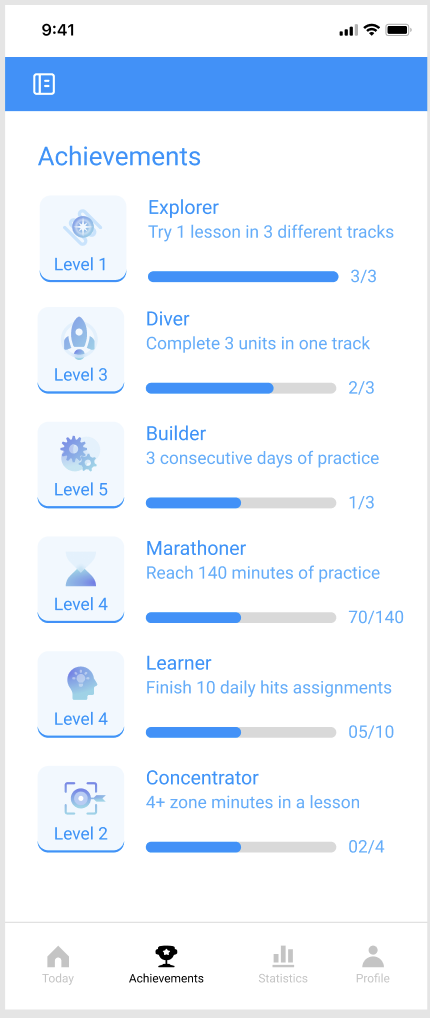
My gamification pitch and system diagrams formed the backbone of the redesign, directly informing the 2.0 product release, which included the redesigned home screen, the relief challenge, and a new reward system. The key insight I surfaced, that user metrics need to be connected to learning skills, shaped the team's approach to gamification going forward.
Reflection
Equa was a different kind of design challenge than my PhD work. In my research I go deep on theory before integrating it into design decisions, and I had a clear theoretical grounding for what makes gamification meaningful rather than shallow. Not all gamification serves the player. Gamification that is poorly aligned with domain content or imposed without consideration for context can actually undermine the very experience it is trying to support. In a mindfulness app, the stakes of getting this wrong felt particularly high.
What was different at Equa was the pace. Decisions needed to be made before I felt fully ready to make them. I found myself navigating a tension between wanting to ground every decision in theory and needing to move fast enough to be useful. What I learned is that in a product environment, those two things cannot always happen in sequence. Sometimes the most responsible thing a designer can do is make a well-reasoned call and remain open to what the evidence shows afterward. Perfect is the enemy of good.